

What Is The Difference Between Population Size And Population Density
The principal difference between population density and population distribution is that the population density is the number of individuals per unit state whereas the population distribution is the spreading of people over an area of state. Furthermore, population density is unable to describe where the population actually lives, different population distribution.
Population density and population distribution are ii measurements of population used in a variety of applications in ecology.
Key Areas Covered
1. What is Population Density
– Definition, Features, Examples
2. What is Population Distribution
– Definition, Features, Examples
3. What are the Similarities Betwixt Population Density and Population Distribution
– Outline of Mutual Features
four. What is the Difference Between Population Density and Population Distribution
– Comparison of Cardinal Differences
Key Terms
Advantages, Disadvantages, Population Density, Population Distribution
What is Population Density
Population density is the number of individuals that live in a unit of measurement area in a specified time. As an instance, the population density of China is 144 people per square km in 2012. The density of the population of a item area is determined by the geographical features such every bit the shape and the height of the land, available resources, climate, etc.
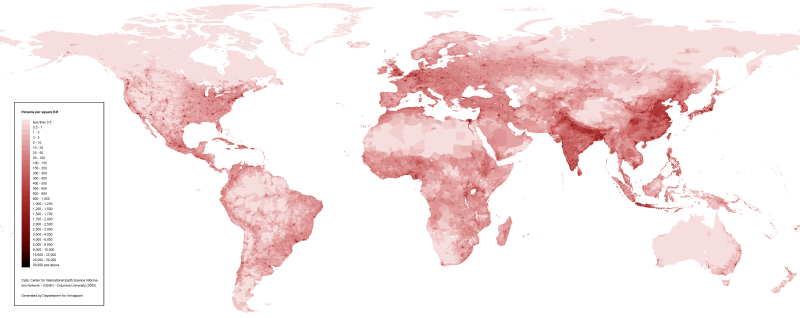
Effigy ane: Globe Homo Population Density Map
When it comes to the man population, these factors can be economic, social, and political. Populations with high density can have some advantages:
- Strong economical system
- People tin can take more than opportunities
- Easy access to resource
Populations with less density take their own disadvantages likewise:
- Population starts to subtract due to the less number of individuals in it.
- Predators tin can easily catch individuals.
What is Population Distribution
A distributed population has several advantages over dense population to a sure extent. Every bit an example, the natural weather condition of China leads to the unevenly distributed population.
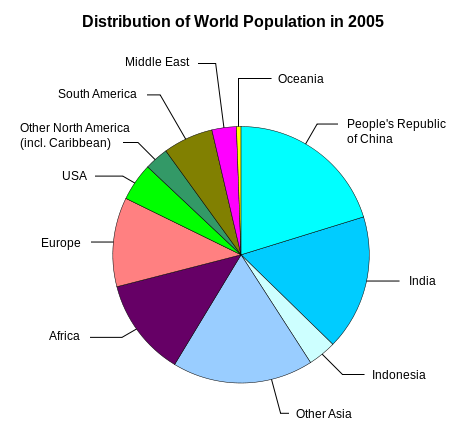
Figure 2: World Population Distribution
An evenly distributed population has its own benefits. Some of them are described beneath:
- Each individual can occupy a sufficient surface area for living.
- They have more privacy; less peer pressure level.
- They can use renewable energy sources.
- They can live in a cleaner environment.
- They are far away from danger.
The less distributed population has its disadvantages as described below:
- Spread of diseases is high in dense areas.
- Air, water, and land pollution get increased.
- Nutrient sources become less abundant.
Similarities Between Population Density and Population Distribution
- Population density and population distribution are 2 measurements of population used in environmental.
- A specific time menses and a geological location have to exist mentioned while describing both parameters.
Difference Between Population Density and Population Distribution
Definition
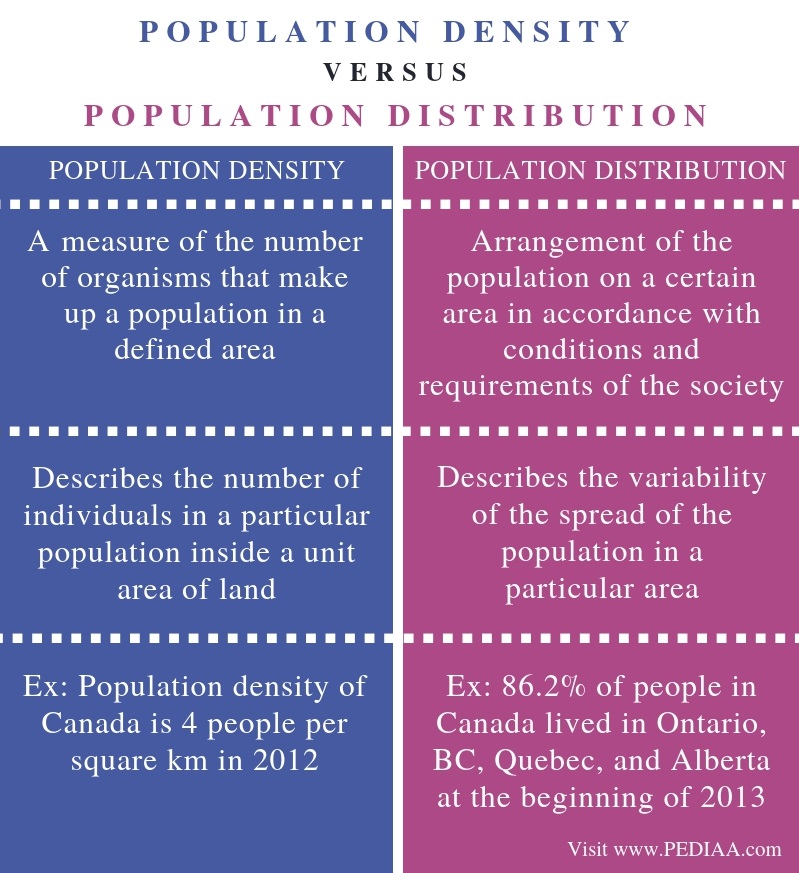
Population density refers to a measure of the number of organisms that make up a population in a defined area while population distribution refers to the organisation of the population on a certain area in accordance with conditions and requirements of the order. This explains the difference betwixt population density and population distribution.
Significance
Population density describes the number of individuals in a particular population inside a unit of measurement area of land while population distribution describes the variability of the spread of the population in a particular area.
Examples
Every bit an example, the population density of Canada is 4 people per foursquare km in 2012 while 86.2% of people in Canada lived in Ontario, BC, Quebec, and Alberta at the start of 2013.
Decision
Population density is the number of individuals in a unit area of country under a defined time menses. Simply, population distribution is the concentration of individuals in a particular area. The chief difference between population density and population distribution is the type of parameters described past each measurement.
Reference:
1. "Population Size, Density, & Dispersal."Khan Academy, Khan University, Available Hither
Paradigm Courtesy:
one. "Globe human population density map" (CC0) via Commons Wikimedia
2. "World population distribution" By The original uploader was Urocyon at English language Wikipedia. – Transferred from en.wikipedia to Commons by Undead_warrior. (CC Past-SA 3.0) via Commons Wikimedia


Nigh the Writer: Lakna
Lakna, a graduate in Molecular Biology & Biochemistry, is a Molecular Biologist and has a broad and great involvement in the discovery of nature related things

What Is The Difference Between Population Size And Population Density,
Source: https://pediaa.com/difference-between-population-density-and-population-distribution/
Posted by: alfarouposyleas49.blogspot.com
0 Response to "What Is The Difference Between Population Size And Population Density"
Post a Comment